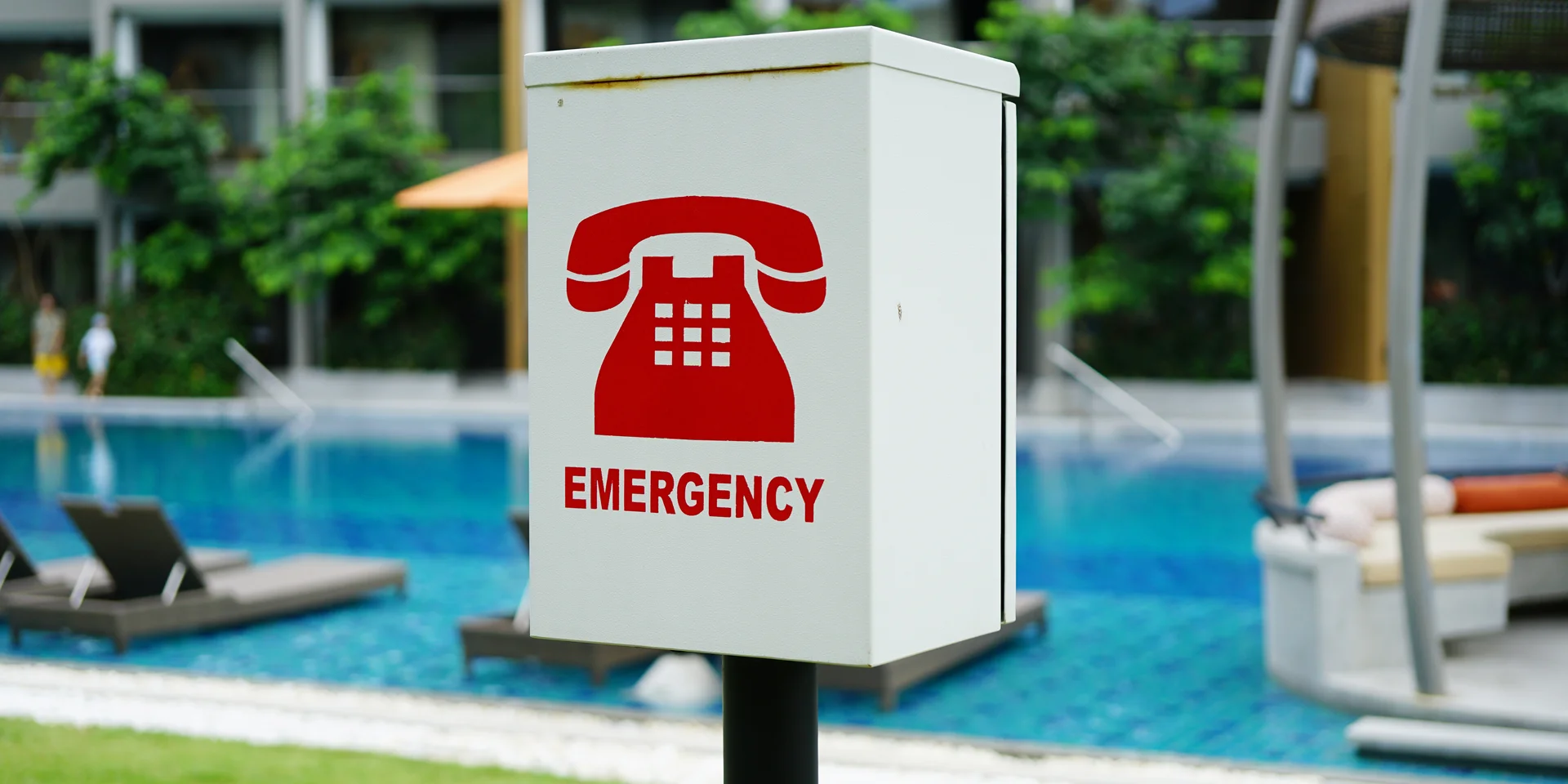
A free, easy-to-read reference guide to pool emergency phone requirements across the United States — built for property managers, HOAs, and apartment communities.
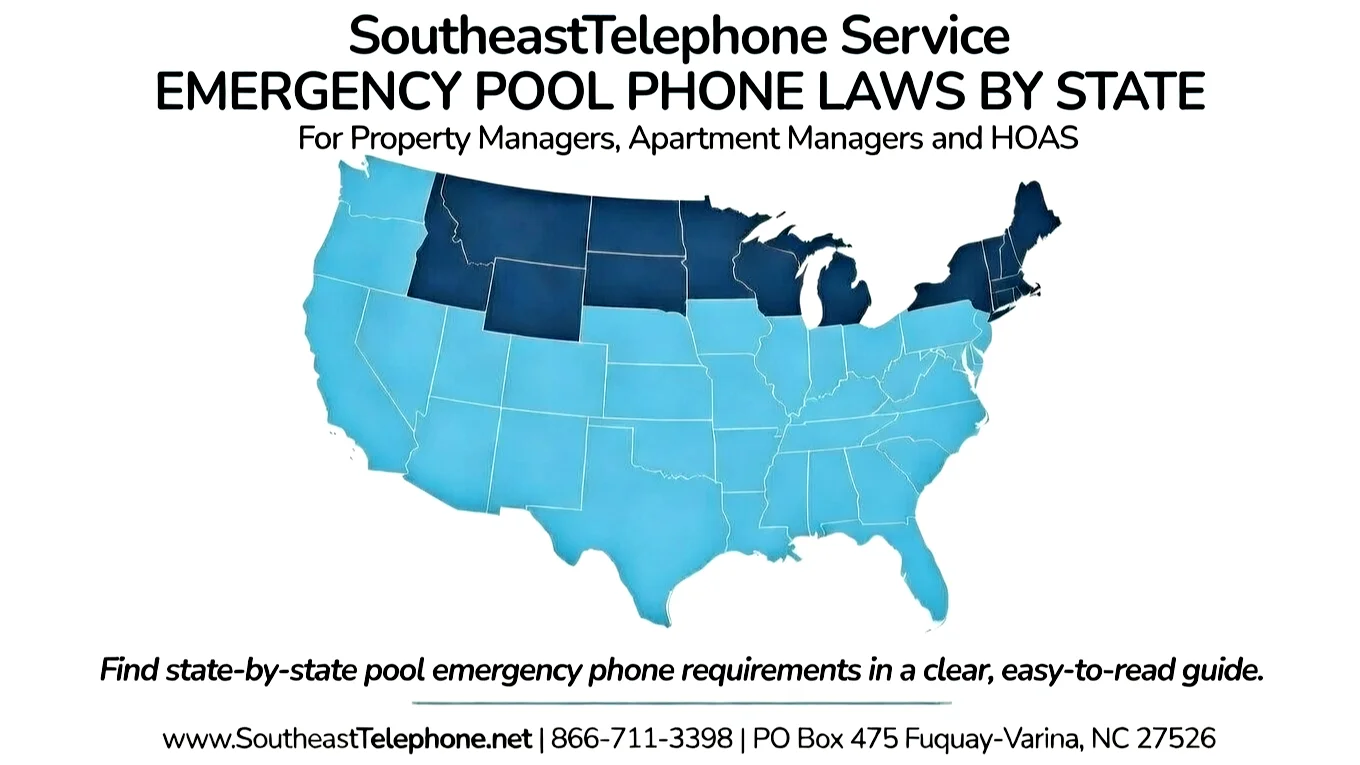
Pool communication requirements vary widely from state to state. Below is a simple, state-by-state overview based on the regulations and code sections cited by each jurisdiction, built as a quick reference for property owners, HOAs, and community managers. If you need help understanding what applies to your specific pool, the pool-phone specialists at SouthEast Telephone are happy to walk you through it.
Each entry below includes a short summary of the communication requirement and the code citation where available. Select a state for a full breakdown, FAQs, and what it means for your property.
Alabama pools must comply with the International Swimming Pool and Spa Code (ISPSC) 2021, §412.2, which calls for a telephone located within the pool area or immediately adjacent to it, capable of connecting directly to emergency services.
Full details →Arkansas law requires all public pools to provide telephone service that is conveniently located for emergency use.
Full details →California requires an operating telephone as part of the mandatory safety equipment for public swimming pools.
Full details →Colorado has adopted ISPSC 2021 §412.2, requiring a telephone within 20 feet of the pool that is capable of dialing emergency services.
Full details →Connecticut requires a telephone or suitable communication device to be readily available at all public pools for emergency use.
Full details →Florida requires an emergency telephone accessible to the pool area. It must be affixed in place and capable of dialing 911 without needing coins or an access code.
Full details →Georgia does not set one statewide rule; local authorities may require an emergency phone, and many counties adopt ISPSC or their own pool codes requiring accessible communication.
Full details →Illinois requires the pool telephone to be accessible, with emergency numbers posted at or near the phone.
Full details →Indiana requires a working telephone within the pool area, or accessible nearby, for emergencies.
Full details →Iowa requires the emergency telephone to be located within an enclosure or building adjacent to the pool and available for emergency use.
Full details →Kansas requires the emergency phone to be accessible and able to reach emergency services.
Full details →Kentucky requires the emergency telephone or device to be readily accessible at all times the pool is in use.
Full details →Maryland requires public pools to have a telephone capable of contacting emergency services, located within the pool enclosure or an adjacent area.
Full details →Michigan requires accessible emergency communication within the pool enclosure.
Full details →Minnesota requires the emergency telephone to be accessible from the pool deck area.
Full details →Missouri requires the emergency telephone to be accessible within 200 feet of the pool.
Full details →Nebraska requires the emergency telephone to be located within the pool enclosure.
Full details →New Hampshire requires an emergency telephone with prominently posted emergency numbers.
Full details →North Carolina requires the emergency telephone to be within 300 feet of the pool. In certain counties, the phone must use a handset rather than push-button-only operation. Clear access, signage, and the ability to dial 911 directly are all required.
Full details →Ohio requires the emergency telephone to be accessible within the pool area.
Full details →Oregon requires the emergency telephone to be available and capable of dialing for emergency services.
Full details →Pennsylvania requires a telephone within the pool enclosure or easily accessible from the deck.
Full details →South Carolina requires a telephone accessible to the pool deck that is capable of dialing emergency services.
Full details →Tennessee requires an emergency telephone accessible within the pool area.
Full details →Texas requires an emergency telephone in the pool area, or within 200 feet of it.
Full details →Utah requires an emergency telephone within 150 feet of the pool.
Full details →Virginia requires an emergency telephone in the pool area with clearly posted directions for its use.
Full details →Wisconsin requires the emergency telephone to be accessible and capable of contacting emergency services.
Full details →Pool regulations change often, and counties sometimes adopt additional requirements. If you're unsure what applies to your property, the team at SouthEast Telephone is here to help.